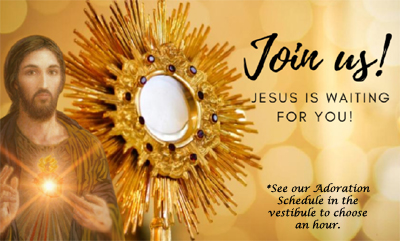
An updated Adoration Schedule is in the vestibule. We have many open hours available for you to spend time alone with Jesus. Call the office to let us know what time you are choosing.
Welcome!
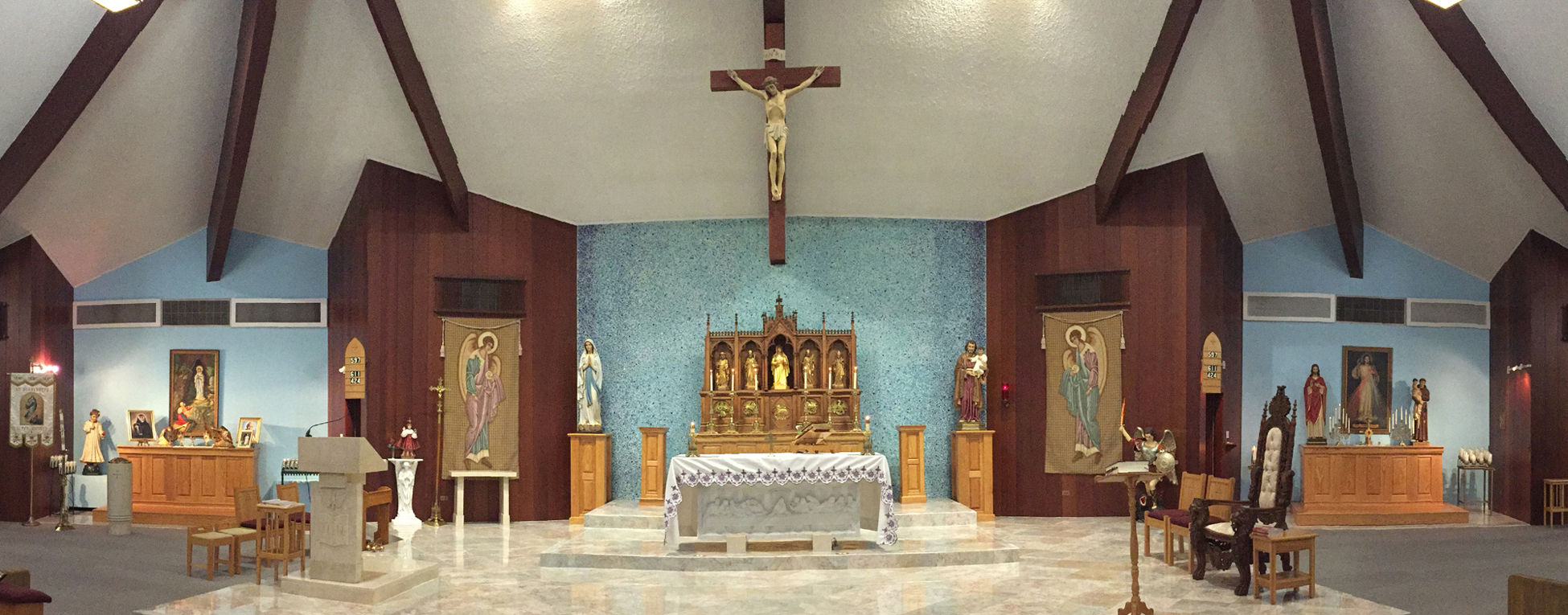
Thank you for visiting us at Saint Bernadette Church, which is a Roman Catholic parish located in Bayou Vista - between Patterson and Berwick, Louisiana,
in the Diocese of Lafayette . St. Bernadette Church continues the Sacramental Traditions of Jesus Christ as handed down by the Apostles, we strive to live lives of Communion and Participation as we seek to fulfill the mission bestowed upon us by Christ.
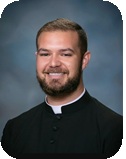
Our Pastor is Father Connor Poirrier.
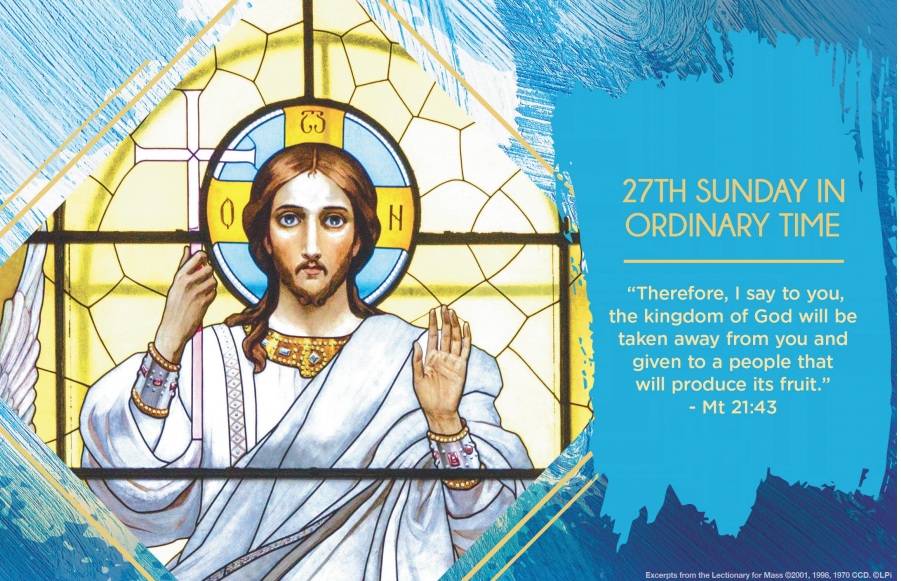
The Liturgy of the Word for the Twenty-Seventh Sunday in Ordinary Time
First Reading
Isaiah 5:1-7
The Lord compares the house of Israel to a vineyard.
Responsorial Psalm
Psalm 80:9,12-16,19-20
The Lord protects his vineyard, the house of Israel.
Second Reading
Philippians 4:6-9
Paul encourages the Philippians to stay faithful to the teaching they received from him.
Gospel Reading
Matthew 21:33-43
Jesus tells the parable about the wicked tenants.
Jesus said to the chief priests and the elders of the people:
"Hear another parable.
There was a landowner who planted a vineyard,
put a hedge around it, dug a wine press in it, and built a tower.
Then he leased it to tenants and went on a journey.
When vintage time drew near,
he sent his servants to the tenants to obtain his produce.
But the tenants seized the servants and one they beat,
another they killed, and a third they stoned.
Again he sent other servants, more numerous than the first ones,
but they treated them in the same way.
Finally, he sent his son to them, thinking,
'They will respect my son.'
But when the tenants saw the son, they said to one another,
'This is the heir.
Come, let us kill him and acquire his inheritance.'
They seized him, threw him out of the vineyard, and killed him.
What will the owner of the vineyard do to those tenants when he comes?"
They answered him,
"He will put those wretched men to a wretched death
and lease his vineyard to other tenants
who will give him the produce at the proper times."
Jesus said to them, "Did you never read in the Scriptures:
The stone that the builders rejected
has become the cornerstone;
by the Lord has this been done,
and it is wonderful in our eyes?
Therefore, I say to you,
the kingdom of God will be taken away from you
and given to a people that will produce its fruit."
✞
Matthew 21:33-43
A Message from Father Poirrier
Grace and peace in Jesus Christ, my name is Father Poirrier and I am glad to say that I am the new pastor for St. Bernadette! I was ordained a priest on June 5, 2021 for the Diocese of Lafayette, and Bishop Deshotel has graciously placed me here to serve this community of Bayou Vista.
Originating from Scott, I went to high school at Acadiana High after which I discerned the priesthood, entered the seminary, and graduated from St. Joseph's Seminary in 2017 and from Notre Dame Graduate Seminary in 2021. Eight years of schooling and mission work has helped prepare me for my life as a priest.
Some of my favorite hobbies are hunting, cooking, and being with people. I am blessed to have the opportunity to get to know you all and be involved in the many ministries that are here and thriving already. Being present to you all is something I am very much looking forward to.
I am glad that God has placed me here to walk with you all in your relationship with Him. If there is one thing that I wish to communicate in this writing, it is this: I would like to be a bridge between you and Jesus. I will do my best to get to know as many of you as possible while being here, and I will try to deliver my best in regards to preaching, teaching and living the faith. Please feel free to reach out to me whenever you would like. Be assured that I am here for you, Father Poirrier is your priest.
Again, I am excited about being here and hope to be able to walk with you all. Be assured of my love and prayers for you and your families. Please remember me in yours. God Bless!
The liturgical readings today ask us a simple but challenging question: What kind of fruit is my life producing?
Jesus presents the image of a vineyard. A landowner carefully prepares his vineyard, protects it, and gives it everything necessary to produce good grapes. Yet, at harvest time, he finds only bad fruit. Isaiah gives us the same picture: God has done everything for His people, but instead of justice, He finds injustice; instead of righteousness, He finds violence and selfishness.
Isaiah asks: "What more was there to do for my vineyard that I had not done?" (Isaiah 5:4). That question can also be addressed to us.
God Has Invested in Us:
God has given each of us something: talents, education, family, time, opportunities, relationships, and above all, the gift of faith.
But the important question is not, "What have I received?" but "What have I done with what I have received?"
Jesus says, "By their fruits you will know them" (Matthew 7:16). A Christian life must eventually become visible through our actions.
St. James makes the same point: "Faith by itself, if it has no works, is dead" (James 2:17).
We may have education but use it only for ourselves. We may have money but ignore those in need. We may have authority but use it to control rather than serve. We may come to church every Sunday and still fail to produce the fruits of love, forgiveness, kindness, and justice.
God does not simply look at what we possess. He looks at the fruit we produce.
This can happen in our lives too. We begin to think, "This is my life. My money is mine. My time is mine. My talents are mine."
"A vocation is not a fixed point, but a dynamic process of maturation sustained by intimacy with our Lord. To grow in one's vocation means being with Jesus, allowing the Holy Spirit to act in our hearts and in the circumstances of life, and reinterpreting everything in light of this gift."
✞ Pope Leo XIV
Everyone Has a Divine Vocation
"Jesus has a specific task in life for each and every one of us. Each one of us is hand-picked, called by name by Jesus! There is no one among us who does not have a divine vocation! Some are called audibly by God, but the usual kind of call is internal, through the inner working of the Spirit."
✞ Homily by Pope Saint John Paul II
I KEEP ROSARIES TUCKED AWAY IN SEVERAL PLACES - IN MY CAR, IN MY DESK DRAWER, IN THE POCKET OF MY COAT - READY WHEN I NEED THEM.
Each mystery of the rosary calls us not just to remember the life of Christ, but to be transformed by it. When I pray the rosary, I'm reminded of our faith's call to mercy, to humility, to sacrifice. And that doesn't stay in the chapel or the car - it moves into daily life.
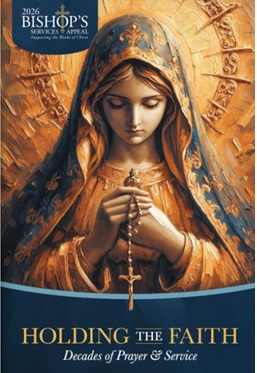
This year, with our 2026 Bishop's Services Appeal theme Holding the Faith: Decades of Prayer & Service, we reflect on how our collective acts of charity form a powerful chain, much like the rosary itself.
Every act of generosity is like a bead on the rosary, creating the chain of prayer and service that is the Diocese of Lafayette. Your gift becomes more than a donation - it becomes a whispered prayer that links us in an unbroken circle of faith. In this, you bring the Mysteries of the Rosary to life.
Honoring the Queen of Heaven: The Tradition of May Crowning
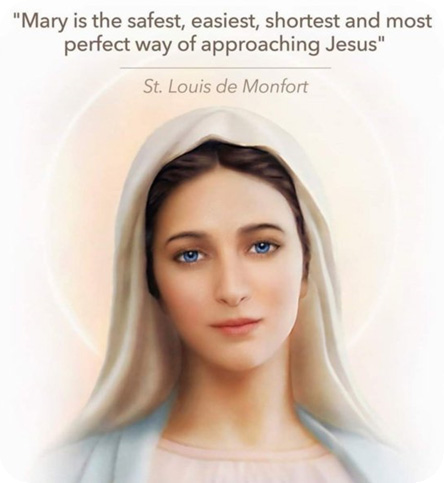
In May, a month of renewal-of new life and new beginnings-blossoms return and creation awakens. This is when the Catholic Church turns with love and reverence to the Blessed Virgin Mary-our Mother and Queen. Among the most cherished devotions of this season is the May Crowning, a time-honored tradition that lifts our hearts toward heaven through Mary, who always leads us to her Son.
For generations, parishes, schools, and families around the world have marked the month of May with processions, hymns, and flower offerings in honor of Mary. At the heart of these celebrations is the crowning of a statue of the Blessed Virgin-a visible sign of our love for the one who is both Mother of God and Queen of Heaven. We crown Mary because she is, in every way, a queen-not in the worldly sense, but in the kingdom of God. As the Mother of Jesus, the King of Kings, Mary holds a unique and exalted place. Her perfect discipleship, her faithful "yes" to God's will, and her enduring presence with the Church make her the crown of all creation. ✞ St. John's Seminary Blog
Hail, holy Queen enthroned above, oh Maria.
Hail, mother of mercy and of love, oh Maria.
Triumph all ye cherubim, Sing with us ye seraphim.
Heaven and earth resound the hymn.
Salve, Salve, Salve Regina.
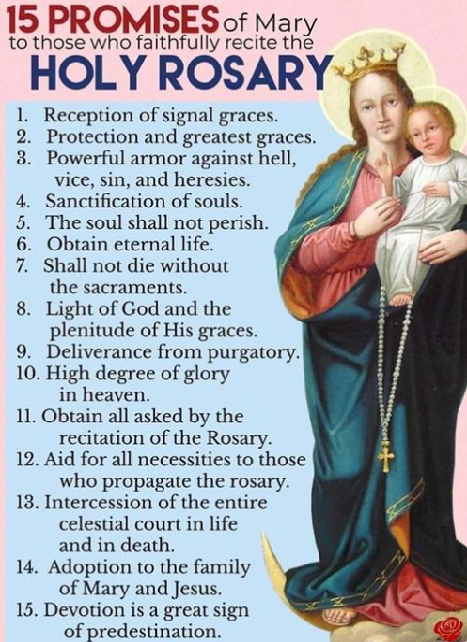
The beautiful tradition of May Crowning reflects the beauty of the 5th Glorious Mystery of the Holy Rosary which it evokes. Honoring Our Lady, Queen of Heaven and Earth, honors her Son, Our Lord Jesus Christ Who first crowned her as His Queen. Adorning Our Lady with a crown of flowers is a custom of great devotion to Our Holy Mother and recalls the beauty of her love for us during difficult times in the world.
Our Lady always guides as a loving Mother. Her Immaculate Heart and her maternal beauty will always triumph over the ugliness of sin and suffering.
As we crown the Blessed Virgin on Mother's Day, we ask that she intercede for us to her Son.
Remember, O most gracious Virgin Mary, that never was it known that anyone who fled to thy protection, implored thy help, or sought thine intercession was left unaided. Inspired by this confidence, I fly unto thee, O Virgin of virgins, my mother; to thee do I come, before thee I stand, sinful and sorrowful. O Mother of the Word Incarnate, despise not my petitions, but in thy mercy hear and answer me. Amen.
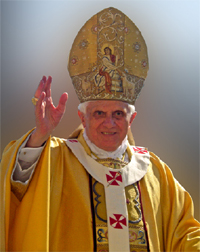
Holiness demands a constant effort, but it is possible for everyone because, rather than a human effort, it is first and foremost a gift of God, thrice holy. The Apostle John remarks: See what love the Father has given us, that we should be called children of God; and so we are. It is God, therefore, who loved us first and make us his adoptive sons in Jesus. Everything in our lives is a gift of his love: how can we be indifferent before such a great mystery? How can we not respond to the heavenly Father's love by living as grateful children? In Christ, he gave us the gift of his entire self and calls us to a personal and profound relationship with him. Consequently, the more we imitate Jesus and remain united to him the more we enter into the mystery of his divine holiness. We discover that he loves us infinitely, and this prompts us in turn to love our brethren. Loving always entails an act of self-denial, "losing ourselves," and it is precisely this that makes us happy….
In truth, the blessed par excellence is only Jesus. He is, in fact, the true poor in spirit, the one afflicted, the meek one, the one hungering and thirsting for justice, the merciful, the pure of heart, the peacemaker. He is the one persecuted for the sake of justice.
The Beatitudes show us the spiritual features of Jesus and thus express his mystery, the mystery of his death and Resurrection, of his Passion and the joy of his Resurrection. This mystery, which is the mystery of true blessedness, invites us to follow Jesus and thus to walk toward it. To the extent that we accept his proposal and set out to follow him—each one in his own circumstances—we too can participate in his blessedness. With him, the impossible becomes possible and even a camel can pass through the eye of a needle; with his help, only with his help can we become perfect as the heavenly Father is perfect.
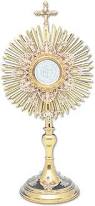
One of the greatest graces for our parish is Perpetual Eucharistic Adoration in our chapel.
To quote Pope John Paul II; "We come here to meet the Heart of Jesus pierced for us, from which water and blood gush. It is the redeeming love, which is at the origin of salvation, of our salvation, which is at the origin of the Church. Now still today, the living Christ loves us and presents His Heart to us as the source of our redemption… We are called not only to meditate and contemplate on this mystery of Christ's love; we are called to take part in it. It is the mystery of the Holy Eucharist, the center of our Faith, the center of our worship of Christ's merciful love manifested in His Sacred Heart, a mystery which is adored here night and day. In the Eucharist – this is also the meaning of perpetual adoration – we enter the movement of love from which all interior progress and all apostolate efficacy springs."
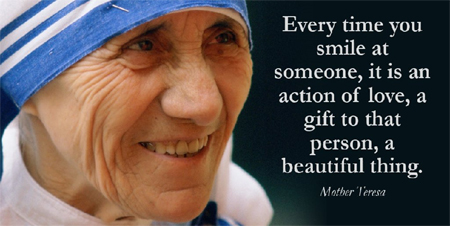
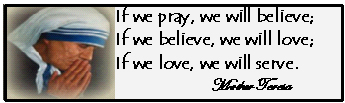
Mother Teresa taught "When you look at the crucifix, you understand how much Jesus loved you then. When you look at the Sacred Host you understand how much Jesus loves you now."
This examination of conscience is not intended merely as a checklist to be used prior to confession. The purpose of this examination is to help souls to know what actions or attitudes are sinful and the gravity of the particular sin. The hope is that this knowledge will serve to keep people from committing these sins.
* Three things are necessary for a sin to be mortal: 1. Serious matter (things listed on this sheet); 2. Knowledge or firm belief that the act is seriously wrong prior to committing the act; 3. Full consent to the will.
All three of these conditions must be present simultaneously for a sin to be mortal. This means that if you did not know the act was seriously wrong, then you are not guilty of having committed a mortal sin. If you did not will the act, e.g., if you were forced or if it was in a dream, you are not guilty of having committed a mortal sin.
All mortal sins committed since your last confession must be confessed by both type and number, i.e., the title of the sin and how many times it was done. If there is a mortal sin from the past that was forgotten and has not been confessed, it should be confessed at your next confession. It is not necessary to confess venial sins, but it is a good and pious practice.
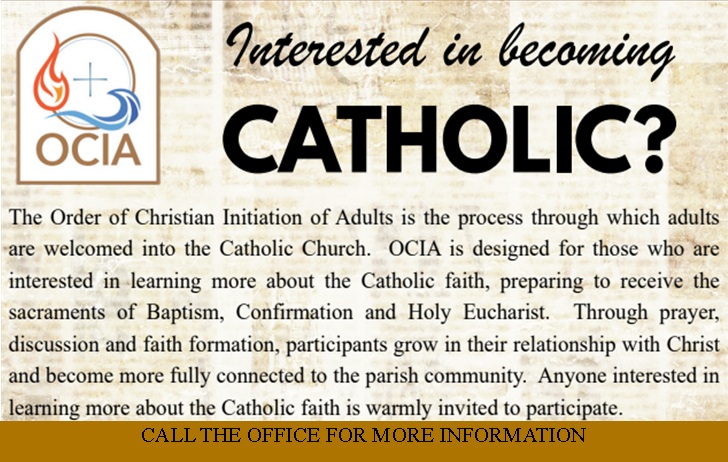
There's an old saying that goes, "Once a Catholic, always a Catholic." Maybe you have been away from the Church for a little while or quite some time, but somehow you now feel a tug at your heart calling you back home to the Catholic Church. That's why we're here.
Whether or not you know you want to return to the Catholic Church, we're here to help you take that second look. That mysterious pull inside you, driving you to look into your faith once more, comes directly from God. Your Heavenly Father is yearning for a relationship with you again, in the Church founded by Jesus 2000 years ago. He's waiting for you with open arms. Please Read More...
USCCB - Pro-Life Activities
Laws that permit or promote abortion, infanticide, human cloning, destructive embryo research or physician-assisted suicide ignore the sanctity of each human life and undermine the foundation of a just and healthy society. As citizens and people of faith, each of us should actively advance our convictions in the public square in every legitimate and ethical way. We should rededicate ourselves to upholding the sanctity of human life, and hold those elected to represent us to the same standard. Please Read More...
Voter's Guide for Serious Catholics
This voter's guide helps you cast your vote in an informed manner consistent with Catholic moral teaching.
This voter's guide identifies five issues involving "non-negotiable" moral values in current politics and helps you narrow down the list of acceptable candidates, whether they are running for national, state, or local offices. Please Read More...
Weekly Reflection
The New Vineyard of Grace Jesus said to them, "Did you never read in the Scriptures: The stone that the builders rejected has become the cornerstone; by the Lord has this been done, and it is wonderful in our eyes? Therefore, I say to you, the kingdom of God will be taken away from you and given to a people that will produce its fruit."
Matthew 21:42-43
The Parable of the Wicked Tenants is rich in Old Testament imagery. The image of the vineyard comes from the Prophet Isaiah (Isaiah 5:1-7) and represents the people of Israel. The landowner is God, who, from the time of Abraham, has lovingly and intentionally cultivated His people. The hedge, tower, and winepress symbolize God's providential care, protection, and the structure He established for their spiritual growth, respectively.
The tenants are the religious elite of Israel who were entrusted with guiding the people in holiness. The servants sent by the landowner are the prophets-faithful messengers consistently rejected and mistreated. Finally, the son is Jesus Himself, sent by the Father as the culmination of His divine outreach.
The parable ends in tragedy with the son's murder. Yet from that tragedy arises a new beginning: "The kingdom of God will be taken away from you and given to a people that will produce its fruit" (Matthew 21:43). Though Jesus was addressing the religious leaders of His time-the scribes, Pharisees, chief priests, Sadducees, and elders-His enduring promise of a new beginning speaks to us today.
We are invited to be part of the people to whom God now entrusts His vineyard, the Church. Today, the hedge, winepress, and tower represent the Sacraments, the teaching authority of the Church, Sacred Scripture, and the communion of the faithful. God continues to cultivate His vineyard with great care, expecting it to bear fruit through our lives of holiness, fidelity, charity, and truth. Each of us, as members of the Body of Christ, is called to receive this trust with gratitude and to labor diligently for the Kingdom, never forgetting the price paid by the Son who was cast out and killed for our redemption.
Sometimes, when we speak of "the Church," we do so as if it were some distant institution. Our minds may turn immediately to the Vatican, the pope, or the local bishop. While these shepherds hold crucial and foundational roles within the vineyard, we need to understand the Church in a more encompassing way.
To use the image from today's parable, the vineyard and the fruit it is meant to bear are not equated exclusively with the tenants, the servants, the son, or even the landowner. The vineyard itself represents the entire people of God. The fruit it produces is the grace-filled witness of lives transformed by faith. This includes all of us: clergy, religious, and laity alike. Every member of the Church is a laborer in the vineyard, called to work together, under the guidance of Christ, the true Son, and to offer to the Father a rich harvest of justice, mercy, and truth.
Reflect today on how to make this parable your personal calling. The Kingdom of God has been partly entrusted to you to be one who will labor for the salvation of souls-"people that will produce its fruit." The work of evangelization is an ongoing and urgent mission. In what ways is God calling you to work in His Divine Vineyard? Is it through faithful prayer, by which the vines of grace are pruned and nourished? Is it through the work of harvesting, where you draw others to Christ by your words, your witness, and your works of love? Is it through quiet perseverance in suffering, offered in union with the Crucified One? However God calls you, do not delay. Receive His trust with humility, and labor with joy. The vineyard is His, but the fruit depends, in part, on you.
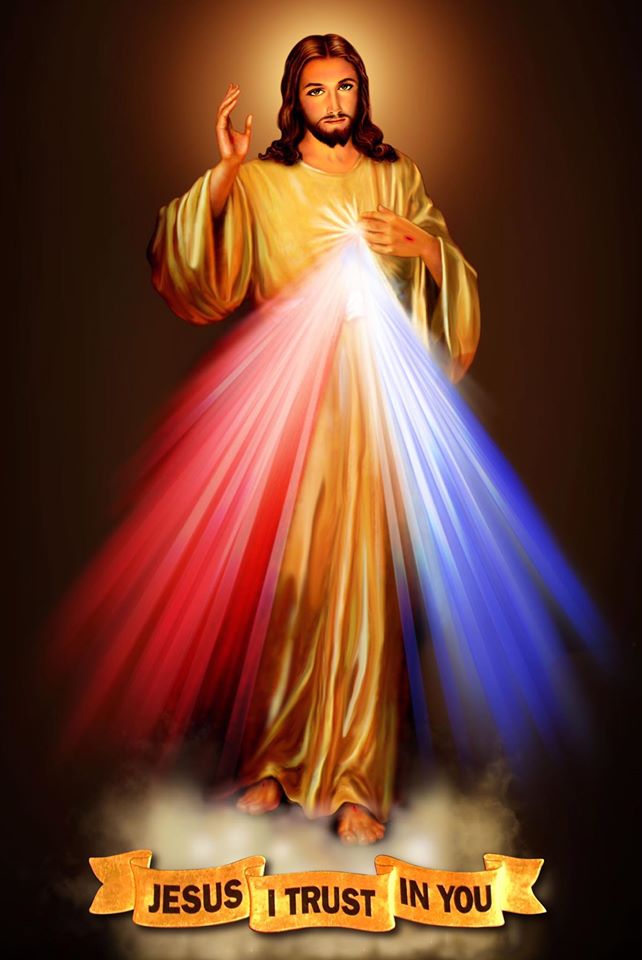
My glorious King, You have called us to Yourself and made us members of Your Kingdom. You have also sent us forth to labor in the vineyard of Your Church and help draw many souls to Your Sacred Heart. Please reveal to me the role and mission You have entrusted to me. May I listen attentively to Your gentle commands and respond with a heart full of generosity and faith. May Your Church-of which I am a living member-continue to bear abundant fruit through the grace You pour forth. Jesus, I trust in You. Source: mycatholic.life
Get Involved-
Catholics have a long history of action - feeding the hungry, sheltering the homeless, caring for the poor, praying for souls. Are you doing all you can to help? If not, find out if there is a parish ministry that could use your time, talent, or treasure. Catholics are meant to make a difference.
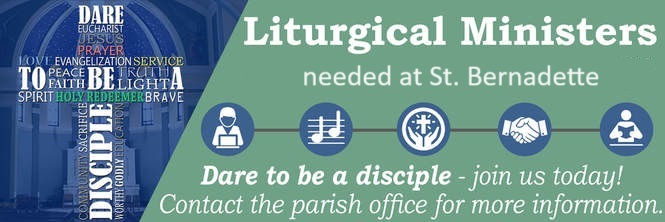
Lay people who place their time and talent as acolytes (altar servers), lectors, extraordinary ministers of Holy Communion, cantors, choir members, instrumentalists, and ushers become more fully in union with Christ and with each other.
Our current ministers are ready to partner up with any and all who are willing to say yes. At one time, we were all nervous and feared stepping into the sanctuary of the church - some of us are still nervous today. You don't have to do it alone. We will support and guide you.
Knights
of Columbus
Knights of Columbus Council 6211 is located in Bayou Vista, La. We are currently recruiting new members from the Parish.
Monthly Meetings for the Bayou Vista Knights Council are held on the 1st Wednesday of every month at 7:00 p.m.
Location for the meeting is at 113 Sunset Rd, Bayou Vista, LA 70380. KC Council 6211 Contact Info... Knights
of Columbus Info...
St. Bernadette Parsih Pastoral Council and Finance Committee






 Holiness demands a constant effort, but it is possible for everyone because, rather than a human effort, it is first and foremost a gift of God, thrice holy. The Apostle John remarks: See what love the Father has given us, that we should be called children of God; and so we are. It is God, therefore, who loved us first and make us his adoptive sons in Jesus. Everything in our lives is a gift of his love: how can we be indifferent before such a great mystery? How can we not respond to the heavenly Father's love by living as grateful children? In Christ, he gave us the gift of his entire self and calls us to a personal and profound relationship with him. Consequently, the more we imitate Jesus and remain united to him the more we enter into the mystery of his divine holiness. We discover that he loves us infinitely, and this prompts us in turn to love our brethren. Loving always entails an act of self-denial, "losing ourselves," and it is precisely this that makes us happy….
 One of the greatest graces for our parish is Perpetual Eucharistic Adoration in our chapel.